Grew Up with Violent Anger
© copyright 2015 by Lynette J. Hoy, NCC, LCPC
Question
I have this problem that I’m hoping someone here can give me some kind of route to solution with. I grew up in a very violent atmosphere and I was beaten throughout most of my life. Before I would just take it and then go on with my business…but when I reached about the age of 16 I became very defensive and violent towards anyone who would attack me. For example…one time my dad got mad at me and grabbed me by the back of the neck…and before I could even think about it, I lashed out and punched him in the face. I didn’t even know I had done it because it happened so quickly. It seems like now that I have gone through such a violent childhood that whenever any situation where someone gets aggressive towards me and then grabs or pushes me…before I can even think about it…I lash out! Now my big issue with this is…a couple of times my fiance has pushed me when she was mad about something, and both times that it has happened…I really don’t know what it was…but something in my head flashed a big red STOP sign before I even came close to lashing out. I love her more than anything and I trust that because of that…I would never hurt her! I am asking for help because even though I think that…I have to be 100% Positive that I won’t do anything!!! Please let me know what you think or a way you could help???_________________
Answer: You need to have a plan to prevent your anger from escalating. Once anger is triggered – your flght/flight response is triggered and this happens within 1-3 seconds. Thus, you don’t have much of a chance to stop a harmful reaction and with your background – you may lash out and hurt the one you love.
Take a Time-Out: A time-out will help you cool down and think through the situation and challenge any cognitive distortions you may be dealing with. I recommend that you take a time-out when you and your fiancee begin to have a disagreement. It sounds like neither of you has skills to talk through conflict in a healthy way. When either of you notices tension or conflict in the relationship – hurt or misunderstanding …call a time-out for at least 30 minutes.
Ask: what am I angry or frustrated about? What is the issue? What do I need or want to happen? How can I communicate my need with compassion? How does my request benefit the relationship and meet my fiancee’s needs? Then, come back ready to listen as well as communicate your needs respectfully.
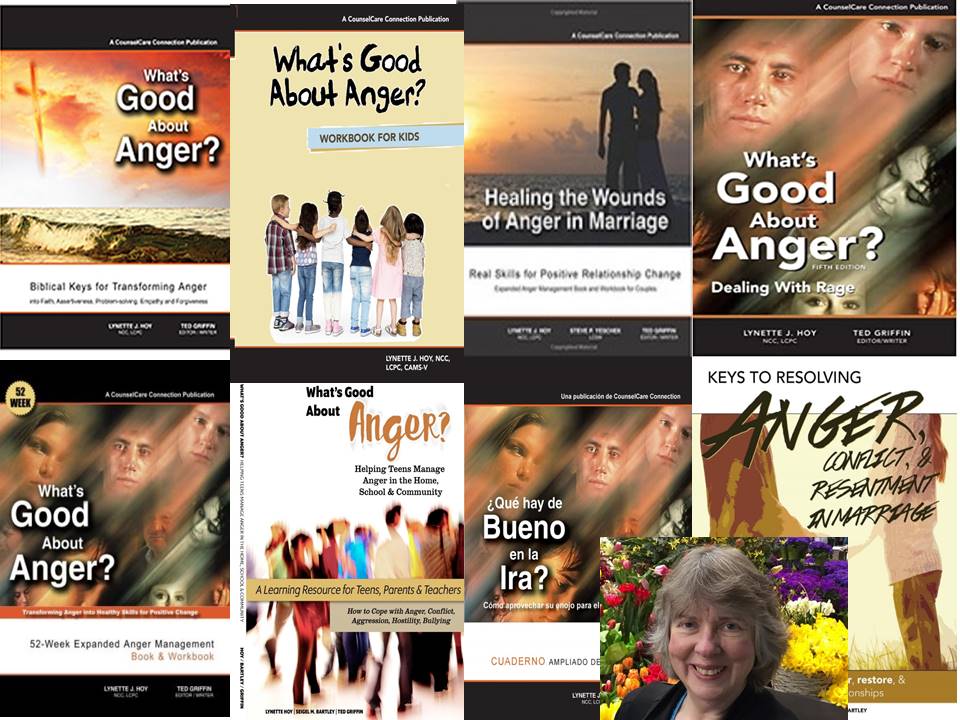
Anger Management training/counseling: You need to work on managing your anger. In the book: What’s Good About Anger? we discuss how to turn anger into faith, assertiveness, problem-solving and forgiveness. We recommend logging anger and identifying triggers (stress, physiological, emotional, cognitive) so you can prevent anger escalation early-on. If you do counsel with a professional – ask if they specialize and have been trained in anger management. Many counselors are not trained in helping people learn to defuse anger. See www.aacc.net for a directory of counselors. We have found many people are helped by our distance-learning Anger Management Courses. Hope this helps you! God bless!
~ © copyright 2005 by Lynette J. Hoy, NCC, LCPC. Lynette is a Marriage and Family Counselor with CounselCare Connection and National Certified Counselor. She is the co-author of What’s Good About Anger? and a speaker for community, women’s and church organizations.